The Ten-Thousand Year Fever by Loretta A Cormier
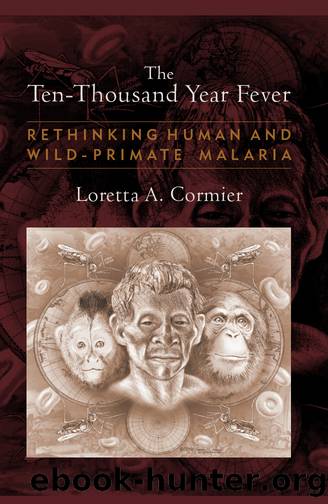
Author:Loretta A Cormier [Cormier, Loretta A]
Language: eng
Format: epub
Tags: Social Science, Anthropology, General
ISBN: 9781315417073
Google: jqtmDAAAQBAJ
Publisher: Routledge
Published: 2016-06-16T06:03:03+00:00
NOTES
1. The spleen has important role in the disease process of malaria, being a key site for removal of parasitized erythrocytes, generation of immunity, and production of new erythrocytes (Engwerda, Beattie, and Amante 2005).
2. The long-tailed macaques were introduced to Mauritius in relatively recent times, which fact may have some relationship to differences in their reaction.
Chapter 7
ETHICS: HUMAN EXPERIMENTATION
This chapter reviews early human experiments involving malaria. Many involved the testing of antimalarial drugs but were also driven by concerns of the potential for wild-primate malarias to be transferred to humans zoonotically. The purpose of this chapter on the human malaria trials is not to review all human experimentation but to discuss some of the ethical issues in early human experimentation and what was learned about human susceptibility to wild-primate malarias. Such information is valuable to reexamine today, because ecological changes are bringing human and wild primates into contact, making the possibility of lateral transfer of disease more likely.
A watershed event that led to attempts to cross-infect primate species with novel forms of malaria was the accidental transmission of wild primate Plasmodium cynomolgi to malaria researchers in 1960 in the United States. Although endemic malaria had been effectively eradiated in the United States by mid-century, cases of malaria in U.S. citizens returning from travel abroad raised the specter of malaria becoming reestablished on U.S. soil. The World War II-era Stateville prison malaria studies are well documented, but less attention has been given to the Atlanta Penitentiary studies of the 1960s.
The Stateville malaria project involved infecting prisoners with human malaria and testing antimalarial drugs. The Atlanta Penitentiary studies involved intentional exposure of inmates with wild-primate malarias to determine whether infections could be established. Before 1960 it was not believed to be possible for humans to acquire a nonhuman primate form of malaria, until a researcher was accidentally infected with P. cynomolgi (common in macaques). Publications, particularly in the American Journal of Tropical Medicine and Hygiene, revealed that over a 10-year period, several hundred prisoners were inoculated with various strains of wild-primate malaria. Wild-primate malaria was also used for a short time as a treatment for neurosyphilis.
This chapter also includes various isolated cases of humans naturally acquiring wild-primate malarias. The recent outbreaks of macaque P. knowlesi in Indonesia are addressed in the final chapter.
Download
This site does not store any files on its server. We only index and link to content provided by other sites. Please contact the content providers to delete copyright contents if any and email us, we'll remove relevant links or contents immediately.
| Administration & Medicine Economics | Allied Health Professions |
| Basic Sciences | Dentistry |
| History | Medical Informatics |
| Medicine | Nursing |
| Pharmacology | Psychology |
| Research | Veterinary Medicine |
Periodization Training for Sports by Tudor Bompa(8273)
Why We Sleep: Unlocking the Power of Sleep and Dreams by Matthew Walker(6726)
Paper Towns by Green John(5191)
The Immortal Life of Henrietta Lacks by Rebecca Skloot(4589)
The Sports Rules Book by Human Kinetics(4388)
Dynamic Alignment Through Imagery by Eric Franklin(4217)
ACSM's Complete Guide to Fitness & Health by ACSM(4060)
Kaplan MCAT Organic Chemistry Review: Created for MCAT 2015 (Kaplan Test Prep) by Kaplan(4014)
Livewired by David Eagleman(3775)
Introduction to Kinesiology by Shirl J. Hoffman(3774)
The Death of the Heart by Elizabeth Bowen(3622)
The River of Consciousness by Oliver Sacks(3604)
Alchemy and Alchemists by C. J. S. Thompson(3522)
Bad Pharma by Ben Goldacre(3428)
Descartes' Error by Antonio Damasio(3279)
The Emperor of All Maladies: A Biography of Cancer by Siddhartha Mukherjee(3163)
The Gene: An Intimate History by Siddhartha Mukherjee(3098)
The Fate of Rome: Climate, Disease, and the End of an Empire (The Princeton History of the Ancient World) by Kyle Harper(3067)
Kaplan MCAT Behavioral Sciences Review: Created for MCAT 2015 (Kaplan Test Prep) by Kaplan(2987)
